
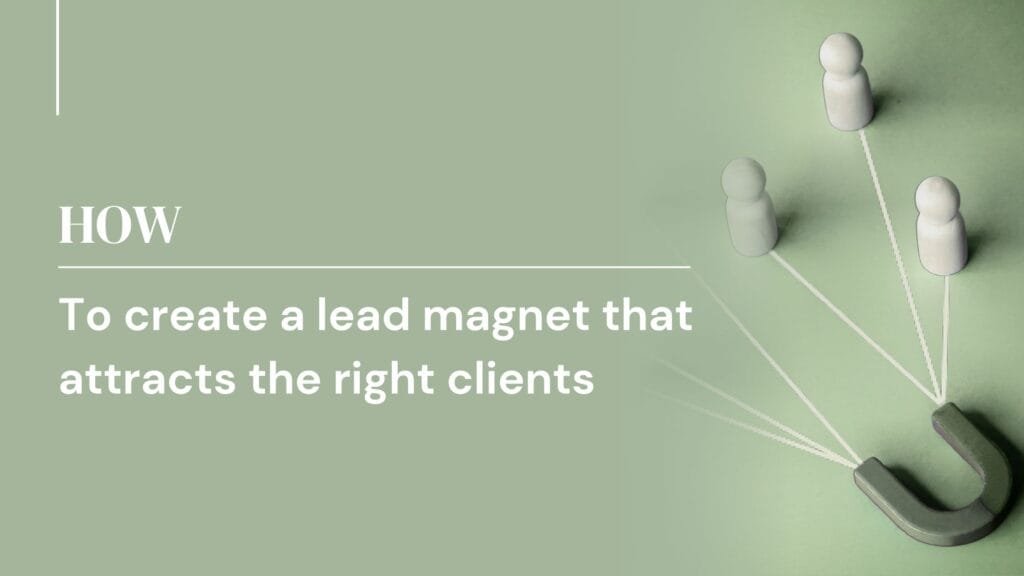
If you’re a coach, you’ve probably been told more than once that you need a lead magnet.
Maybe you’ve thought about creating an ebook, a checklist, or a workbook. Maybe you’ve even started one, only for it to sit half finished because you’re not quite sure if it’s the right thing to create.
More often than not, the issue isn’t a lack of ideas. It’s understanding what kind of lead magnet will genuinely support your audience and how it fits into your wider business, rather than just adding another task to your never ending to do list.
A lead magnet isn’t just a free download. When it’s done well, it helps someone take a small but meaningful step forward, gives them a feel for how you work, and builds trust before they ever think about working with you. When it’s not thought through, it becomes something that gets downloaded and forgotten.
In this post, I’m sharing lead magnet ideas for coaches that work well, not because they’re clever or flashy, but because they help the right people move closer to becoming clients.
What a lead magnet is actually for
Before diving into ideas, it’s worth being clear on the purpose of a lead magnet.
A lead magnet is not about collecting email addresses for the sake of it, and it’s not about giving away everything you know for free. Its job is to solve one specific problem your audience is experiencing and to do it in a way that reflects your approach, values, and expertise.
A strong lead magnet should help your audience feel understood, give them clarity or momentum around a single issue, and naturally lead them towards the next step, whether that’s another piece of content, a conversation, or one of your paid offers.
Keeping that purpose in mind makes choosing the right format much easier.
7 Lead magnet ideas for coaches
There isn’t one best type of lead magnet. Different formats work for different audiences and different offers. What matters is choosing something that aligns with how you like to work and how your clients like to learn.
Below are lead magnet ideas that consistently work well for coaches when they’re designed with intention.
A focused ebook or guide
An ebook works best when it’s specific rather than broad. This isn’t about sharing everything you know. It’s about helping someone understand one core problem more clearly and showing them a way forward.
For example, this might be a short guide that helps your audience understand why they’re stuck, what’s really getting in the way, or what they need to focus on first. The goal isn’t perfection, it’s progress.
When done well, an ebook positions you as someone who understands the bigger picture while still offering practical support.
A checklist or cheatsheet
Checklists and cheatsheets are popular for a reason. They’re quick to consume and help your audience feel like they’re making progress straight away.
This type of lead magnet works particularly well if your audience feels overwhelmed or unsure where to start. A good checklist brings clarity by breaking something down into simple, manageable steps.
For coaches, this might look like a preparation checklist, a decision making guide, or a reminder of things they need to have in place before tackling a bigger goal. The key is to keep it focused on one outcome rather than trying to cover everything at once.
A template or worksheet
Templates and worksheets are ideal if your coaching helps people think differently or make better decisions.
Instead of telling someone what to do, you’re giving them a tool to work things through themselves. This is especially powerful for coaches because it mirrors what happens in a paid session.
A worksheet might help someone reflect, plan, prioritise, or spot patterns they hadn’t noticed before. A template might help them structure something they’ve been avoiding because it feels too big or unclear.
The value here isn’t in how complicated the worksheet is. It’s in how clearly it guides someone through a process.
A short workbook
A workbook goes one step further than a single worksheet. It allows you to guide someone through a small journey rather than a single moment.
This works well if your audience needs help connecting the dots or understanding how different pieces fit together. A workbook can include short explanations, prompts, and space to think or write, helping someone build confidence as they go.
For coaches, a workbook is also a great way to show how you support people without overwhelming them. It gives a real sense of what it’s like to work with you, which makes the next step feel far less intimidating.
Short video training
Not everyone wants to read, and for some audiences, video feels more personal and easier to engage with.
A short video or mini training works best when it focuses on one clear topic rather than trying to be a full course. Think of it as a guided explanation or walkthrough that helps someone understand something they’ve been stuck on.
This format is particularly useful if your coaching relies on nuance, tone, or explaining concepts that are easier to talk through than write down. It also helps your audience connect with you as a real person, not just a name on a page.
A quiz or self assessment
Quizzes and self assessments work well because they help people see themselves more clearly.
Instead of being told what they need, your audience gets to reflect and recognise it for themselves. That moment of recognition is powerful and often leads naturally to a next step.
For coaches, this might be an assessment that helps someone identify where they are now, what’s holding them back, or which area they need to focus on first. When done thoughtfully, a quiz can feel supportive rather than gimmicky.
A free consultation or strategy session
A free consultation can work as a lead magnet, but it needs to be used intentionally.
This option is best suited to coaches who are comfortable with conversations and have a clear structure for their calls. The goal isn’t to sell on the spot. It’s to help someone gain clarity and understand whether working together makes sense.
If you choose this route, it’s important that the session has boundaries and purpose. Otherwise, it can quickly become draining and difficult to manage.
Why so many lead magnets don’t work
If you’ve created a lead magnet before and it didn’t do much, you’re not alone.
Often, the issue isn’t the format. It’s that the lead magnet isn’t clearly connected to what you offer, or there’s no clear next step once someone downloads it. In other cases, the content might be useful but poorly designed, hard to use, or simply forgotten about because there’s no follow up.
A lead magnet doesn’t work in isolation. It needs to be part of a wider system that includes visibility, messaging, and a way for people to continue the conversation with you.
Choosing the right lead magnet for your business
The most effective lead magnet isn’t the fanciest or the longest one. It’s the one that makes sense for where your audience is right now and where you want to take them next.
If your audience feels overwhelmed, something simple and structured often works best. If they need clarity, a worksheet, quiz, or short guide can help them see things differently. And if your work is built around conversation and nuance, a short video or clearly defined consultation might feel more aligned.
What matters most is that your lead magnet has a purpose. It should help your audience take one step forward and make it easier for them to understand how you can help them beyond the freebie.

Find out what makes a good lead magnet and what does on our free webinar
If you’re not sure where to start
If you’ve been sitting on the idea of a lead magnet for a while, or you’ve already created one that isn’t really doing anything, you’re not doing anything wrong. Most of the time, it’s not the idea that’s the problem, it’s the strategy behind it.
I help coaches create lead magnets that are clear, intentional, and actually fit into their business, not just another thing to manage. If you want support choosing the right format, shaping the content, or making sure it leads somewhere meaningful, you can find out more about how we work.
Written by Nikki Clements, founder of Brand You, formerly Nikki Carter Designs. Known as the Lead Magnet Queen, Nikki helps coaches and service based businesses build aligned brands that support visibility, credibility, and sustainable growth.
Blogs
-
Canva vs Adobe vs Affinity: choosing the right design tools (and knowing when to get support)
-
Best free email marketing software for coaches in 2026
-
Do lead magnets actually work (and when they matter for your business)
-
How a lead magnet funnel helps your business grow
-
Lead magnet ideas for coaches that actually lead to clients
-
How to create a lead magnet that attracts the right clients
-
Lead magnet design myths: 5 misunderstandings that stop your lead magnet working
-
Lead magnet design: how to make visuals your audience actually uses
-
Logo file types explained: what they are and when to use them
-
What makes a great logo (and how to create one that actually works)
-
How to choose brand colours that actually fit your business
-
5 Simple branding tips you can implement today
-
Why brand identity is vital for your business
-
Visual branding that builds credibility for service-based businesses
-
13 Smart Ways to Promote Your Lead Magnet Effectively